
Company

Engineering-led. Vertically integrated. Built to ship.

One team designs, builds, and tests every product in our own facility. No outsourcing, no handoffs between design and production.

Read our story
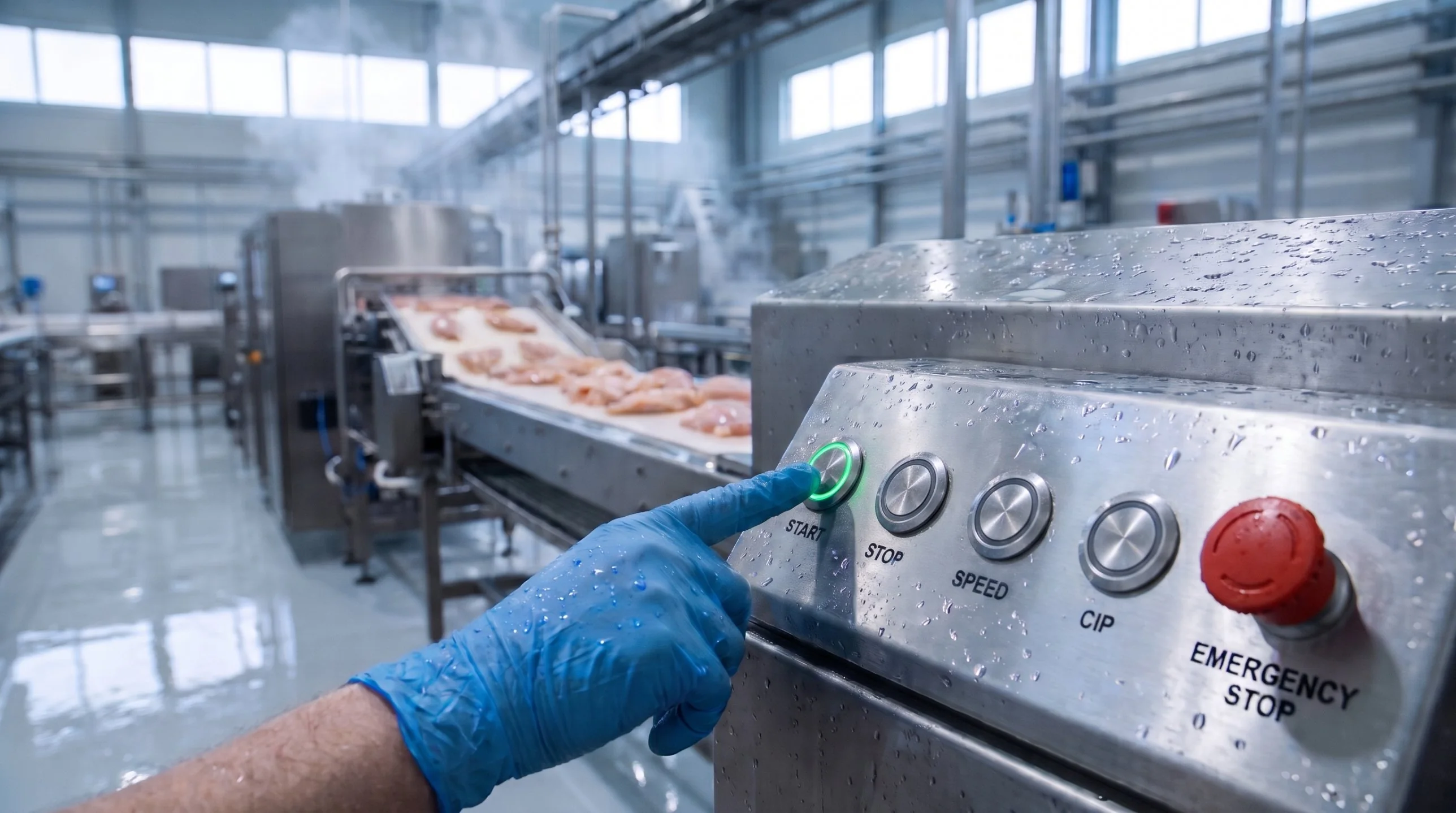
Operator in a nitrile glove at the ring-illuminated START switch on the stainless steel control panel of a poultry processing line
Food processing machines

Durable switches and control panels for food processing machines.

Thousands of presses a day, with wet or gloved hands.

Hosed down with hot water and chemicals, every shift.

Built for the life of the machine, through every shift and every washdown.

A machine that is down does not produce. Its control panel takes thousands of presses a day from wet or gloved hands and is hosed down with hot water and chemicals at the end of every shift. Our piezo switches are built for exactly that: no moving parts to wear, no gaps for water or residue, and wired like the switch you use today.

50M+
Rated actuations
IP69K
Washdown sealed, 100 bar
IK10
Impact rated
316
Stainless steel housings
The environment

What a control panel faces on a processing machine.

Two or three shifts a day, then cleaning. The switches are the most-used part of the machine and the one part that is handled, hosed and wiped every day of its life.

Washdown

Hot water, high pressure, chemicals

Brine, blood, fat and marinade on the panel during the shift, then high-pressure hot water, foam and sanitiser after it. Anything with a seal, a bezel or a gap eventually lets the water in or holds the residue.

Hands and tools

Gloves, wet hands, a knife handle

On a filleting or trimming line the operator keeps the knife in hand and presses the switch with the handle or a knuckle. On a grinder or mixer it is a thick glove. The switch has to register the press whatever does the pressing.

Cold and wet

Chilled halls, wet floors, long shifts

Stiff hands in a cold room, condensation on every surface, operators who change with the shift and read symbols rather than words.

Use

A few switches, pressed all day

Start, stop, program, speed, the next step in the CIP sequence. A handful of switches that have to work every time for years, beside a mechanical emergency stop that stays exactly where it is.

Why piezo

A stainless steel switch with nothing that moves.

A ceramic element behind the steel senses the pressure of a finger, a glove or a knuckle and closes the contact, like the momentary switch you wire today. No spring, no dome, no membrane, no contact block.

Built to outlast the machine

With no part that wears, the switch keeps the same response after years of daily use instead of drifting toward failure. Rated for more than 50 million actuations.

Sealed against water, residue and chemicals

A one-piece stainless face, sealed from the front and the back, IP68 and IP69K, washdown-proof to 100 bar. No gasket, bezel or printed overlay for water, residue or cleaning chemicals to work into.

Works however it is pressed

The switch reads pressure on the steel, not the touch of a finger. Wet hands, any glove, a knuckle or a knife handle all register. With PT Plus, the actuation force is set for the application, so a press is felt and a brush is not counted.

Less downtime, lower maintenance

Every dead or sticking button is a service call and a stopped machine. One sealed part replaces button, holder, contact block, seal and bezel, so there are fewer parts on the panel to fail and fewer to keep as spares.

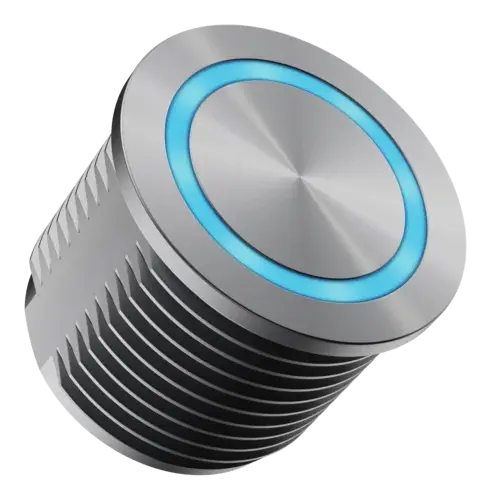
PTL-22 piezo switch with illuminated ring
Ring illuminated

Machine status, shown on the switch itself.

A ring LED around the switch shows the machine state without a second look: ready, running, in CIP, fault. Single colour, two-colour or RGB, driven from 3.3 to 24 V, behind a polycarbonate light guide that is sealed like the rest of the switch. Legends are laser engraved or anodised into the metal, so they stay readable through years of washdown.

Ring LED status Single, two-colour, RGB 3.3 to 24 V Engraved or anodised legends
Where it fits

Built for the operator interface.

RNC switches handle the operator-facing layer of the machine: start, stop, program, speed, CIP steps and status indication. They sit beside the safety-rated functions rather than replacing them.

Wires like the switch it replaces

Normally open momentary contact as standard, 0 to 24 V, 0.2 A, straight into the PLC input. Normally closed, prolonged or toggle on request. With PT Plus: UART, SPI, I2C or Modbus into the machine control.

Confirms it is working

PT Plus switches report their own condition, electronically and through a full mechanical self-test, so a plant that runs unattended knows the panel is live before the shift starts.

Works alongside your safety circuit

Made for the non-safety operator controls. The emergency stop stays a mechanical device on the same panel. Tap, start, stop and program are standard.

Fits the panel you have

Standard M16, M18, M19, M22 and PG16 threads for existing cutouts, one hole per switch; the ring illuminated switch is M22. 16 mm body depth on the PTF-22. Or a complete plate with 4 to 45 switches, your layout and legends, delivered as one tested part.

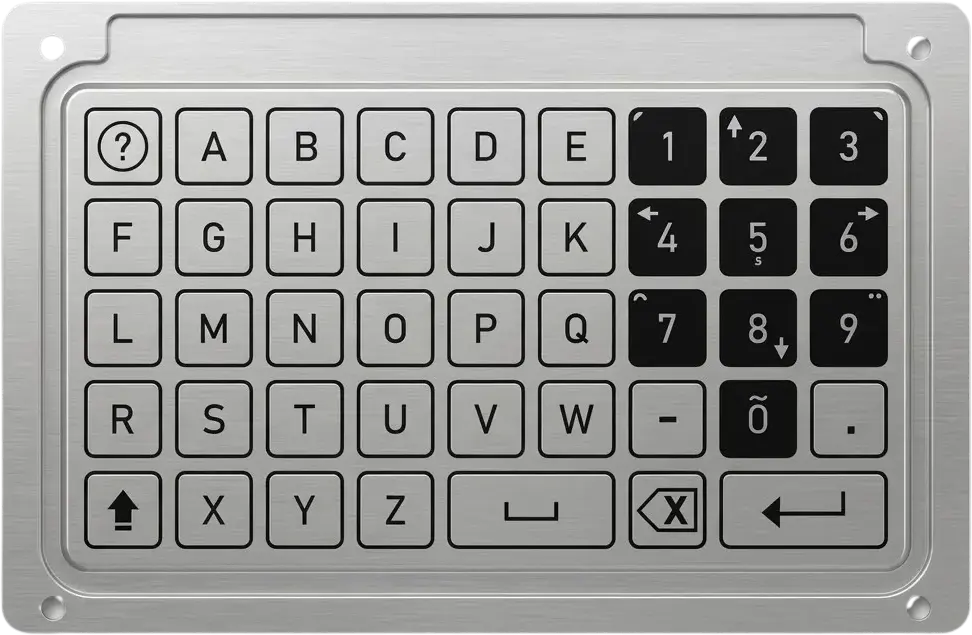
RNC stainless steel piezo operator panel with a full alphanumeric and numeric key layout, as supplied for fuel dispensers
One platform, your panel

Specify the panel. Same engineering underneath.

From a single start switch to a full operator panel, the piezo sensing works through one-piece stainless steel or glass. Two ways to use it:

Regular piezo needs no power supply and closes a contact. PT Plus versions are powered and add higher sensitivity, self-test and communication. Both fit the same cutout and look identical from the front.

Products

Products suited to food processing machines.

PTF-22

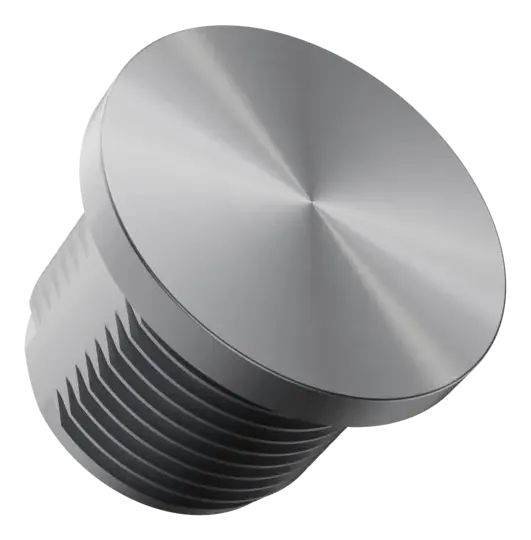
Flat, flush, M22 x 1. The standard start, stop and program switch.

Front diameter25 mm, 1 mm flange, 16 mm body
HousingStainless steel 303, 304 or 316; aluminium 6061 T651 optional
Activation forceBelow 3 N
OutputN.O. momentary, 125 to 300 ms pulse; N.C., prolonged or toggle optional
Rating0 to 24 V AC/DC, 0.2 A (1 A optional)
Sealing and impactIP68 and IP69K, IK10
Temperature−20 to +75 °C operating
LifeMore than 50 million actuations
PTF-22 datasheet and drawing

PTL-22

Flat, ring illuminated, M22 x 1. Status shown on the switch itself.

Front diameter24.6 mm, 20 mm body
HousingStainless steel 303, 304 or 316; aluminium 6061 T651 optional
Ring LEDSingle colour, two-colour or RGB; 3.3, 5, 12 or 24 V
OutputN.O. momentary, 125 to 300 ms pulse; N.C., prolonged or toggle optional
Rating0 to 24 V AC/DC, 0.2 A (1 A optional)
Sealing and impactIP68 and IP69K, IK10
Temperature−20 to +75 °C operating
LifeMore than 50 million actuations
PTL-22 datasheet and drawing

Both are available with PT Plus inside: same cutout, same look, with self-test, programmable logic, −40 to +85 °C and communication over UART, SPI, I2C or Modbus. Complete panels and keypads are built from the same switches. Compare all piezo switches.

Standards your machine has to meet

A flat, sealed, crevice-free control panel supports the hygienic design requirements of EN 1672-2 and ISO 14159 and the EHEDG guidelines in Europe, and the cleanability requirements of 21 CFR 117.40 and NSF/ANSI/3-A 14159-1 in the United States. The IP69K rating follows ISO 20653. We state what the panel supports; certification of the machine remains yours, and we do not claim certificates we do not hold.

How a project runs

From your control panel to series supply.

  1. Within one business day

    Your machine

    Tell us about the machine and the control panel it has today. Our engineers come back with the option that fits.

    Tell us about your machine
  2. Design

    Your panel

    We work from your panel: material, thickness, surface finish, and how the plate is mounted and sealed. You get a clear timeline in the first conversation.

  3. 12 weeks or less

    Samples

    Production-ready samples for your own machine, with the datasheet and drawings. Selected standard switch configurations ship sooner.

  4. 4 to 6 week lead times

    Series supply

    Once you approve the samples, production runs from the same tooling and process.

Timelines vary with complexity. A panel with custom electronics can take longer; simple panels can be faster.

Contact

Tell us about your machine.

One machine, the control panel it has today, and roughly how many you build a year. Our engineers come back with which option fits, what the samples would look like and a short call if you want one.

Or browse switches, keypads and panels first.